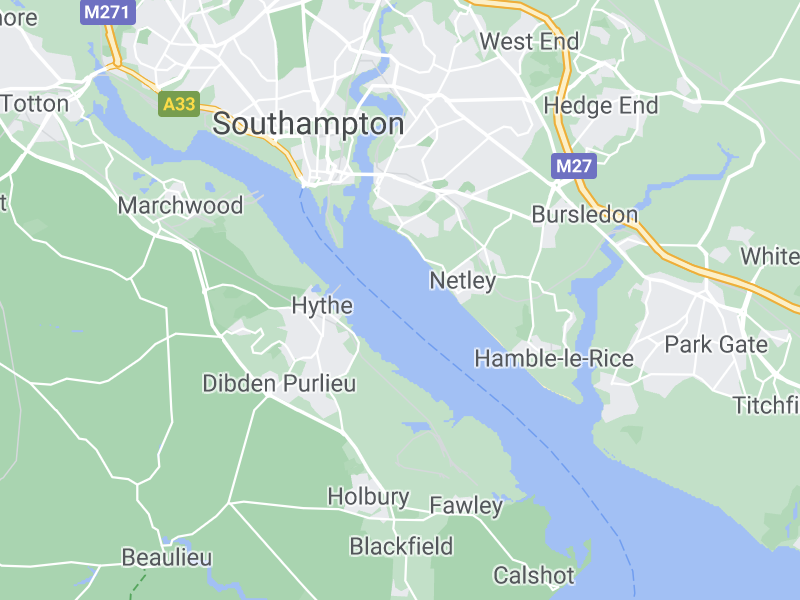
Southampton Water
Southampton Water
Case Study A
Bird species included in model
Bar-tailed godwit (Limosa lapponica), Black-tailed godwit (Limosa limosa), Common redshank (Tringa totanus), Dunlin (Calidris alpina), Eurasian curlew (Numenius arquata), Eurasian oystercatcher (Haematopus ostralegus), Grey plover (Pluvialis squatarola), Ringed plover (Charadrius hiaticula), Turnstone (Arenaria interpres)
Environmental issues simulated
Port development and unspecified driver of prey density. Mitigation due to changing habitat area and food availability
Recommendations from modelling
Port development can decrease shorebird survival, but mitigation by creation of a tidal creek can offset this.
More information
Wood, P.J. (2007). Human impacts on coastal bird populations in the Solent. PhD thesis, University of Southampton.
Funding
English Nature, ABP Marine Environmental Research, Beaulieu Estate
Case Study B
Bird species included in model
Black-tailed godwit (Limosa limosa), Common redshank (Tringa totanus), Dunlin (Calidris alpina), Eurasian curlew (Numenius arquata), Eurasian oystercatcher (Haematopus ostralegus), Grey plover (Pluvialis squatarola), Ringed plover (Charadrius hiaticula)
Environmental issues simulated
Human activity from increased housing, affecting habitat area, availability time and energy need
Recommendations from modelling
Increased disturbance from human activities, associated with increased housing, can potentially decrease shorebird survival.
More information
Stillman, R.A., West, A.D., Clarke, R.T. & Liley, D. (2012) Solent Disturbance and Mitigation Project Phase II: Predicting the impact of human disturbance on overwintering birds in the Solent. Report to the Solent Forum. pp 119.
Funding
Solent Forum
Case Study C
Bird species included in model
Black-tailed godwit (Limosa limosa), Common redshank (Tringa totanus), Dunlin (Calidris alpina), Eurasian curlew (Numenius arquata), Eurasian oystercatcher (Haematopus ostralegus), Grey plover (Pluvialis squatarola), Turnstone (Arenaria interpres)
Environmental issues simulated
Unspecified driver and sea-level rise changing habitat area and habitat availability time
Recommendations from modelling
Habitat loss and sea-level rise can reduce shorebird survival, but effects vary between species.
More information
Bowgen, K.M., 2016. Predicting the effect of environmental change on wading birds: insights from individual-based models. PhD thesis, Bournemouth University in collaboration with HR Wallingford.
Funding
Bournemouth University and HR Wallingford