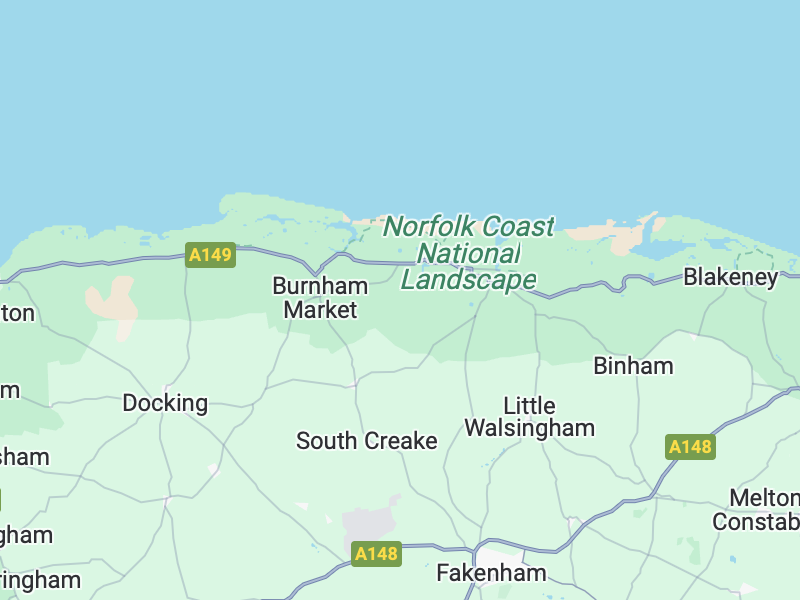
Norfolk

Norfolk

Norfolk

Bird species included in model

Pink-footed goose (Anser brachyrhynchus)

Environmental issues simulated

Interactions between geese and agriculture

Recommendations from modelling

The continued presence of stubble and sugar beet important for supporting the number of birds wintering in the region. The proportion of time spent feeding on sugar beet could be reduced either by disturbance to birds on sugar beet or by the provision of a supplementary sugar beet resource close to the roost. To significantly reduce the proportion of time spent on sugar beet, disturbance would increase the overall time birds needed to feed above that expected, whereas supplementary sugar beet reduced the overall time birds spent feeding.

More information

Stillman, R. A. & Morris, S. E. (in press) Pink-footed geese in North Norfolk: predictions from an individual-based model. BU Global Environmental Solutions report BUG2937 to Natural England.

Funding

Natural England

Ouse Washes

Ouse Washes

Ouse Washes

Bird species included in model

Bewick’s swan (Cygnus columbianus bewickii), Mute swan (Cygnus olor), Whooper swan (Cygnus cygnus)

Environmental issues simulated

Effect on swans of the availability of food resources and levels of competition in agricultural landscapes

Recommendations from modelling

Swans have capacity to buffer against losses of food resources and increased competition by increasing their foraging effort, but this may result in additional grazing damage to agricultural crops.

More information

Wood, K. A., Stillman, R. A., Newth, J. L., Nuijten, R. J. M., Hilton, G. M., Nolet, B. A. and Rees, E. C. (2021) Predicting avian herbivore responses to changing food availability and competition. Ecological Modelling, 441, 10.1016/j.ecolmodel.2020.109421.

Funding

Wildfowl and Wetlands Trust

Poole Harbour

Poole Harbour

Poole Harbour

Case Study A

Bird species included in model

Black-tailed godwit (Limosa limosa), Common redshank (Tringa totanus), Dunlin (Calidris alpina), Eurasian curlew (Numenius arquata), Eurasian oystercatcher (Haematopus ostralegus)

Environmental issues simulated

Unspecified drivers affecting loss of terrestrial habitats and food supply, plus sea-level rise and extreme weather, changing habitat area and availability time, food quality and energy requirements

Recommendations from modelling

Terrestrial habitat loss and sea-level rise can reduce shorebird survival, but effects vary between species.

More information

Stillman, R.A., West, A.D., dit Durell, S.E.A.V., Caldow, W.R.G., McGrorty, S., Yates, M.G., Garbutt, R.A., Yates, T.J., Rispin, W.E. and Frost, N.J., 2005. Estuary Special Protection Areas – Establishing baseline targets for shorebirds, Centre for Ecology and Hydrology, Dorchester, Dorset.

Durell, S.E.A.L.V.d., Stillman, R.A., Caldow, R.W.G., McGrorty, S., West, A.D. and Humphreys, J., 2006. Modelling the effect of environmental change on shorebirds: A case study on Poole Harbour, UK. Biological Conservation, 131(3): 459-473. 

Funding

English Nature

Case Study B

Bird species included in model

Eurasian oystercatcher (Haematopus ostralegus)

Environmental issues simulated

Invasive species changing food density / quality

Recommendations from modelling

Presence of non-native shellfish, by providing additional food, can increase Oystercatcher survival.

More information

Caldow, R.W.G., Stillman, R.A., dit Durell, S., West, A.D., McGrorty, S., Goss-Custard, J.D., Wood, P.J. and Humphreys, J., 2007. Benefits to shorebirds from invasion of a non-native shellfish. Proceedings of the Royal Society B-Biological Sciences, 274(1616): 1449-1455.

Funding

English Nature

Case Study C

Bird species included in model

Avocet (Recurvirostra avosetta)

Environmental issues simulated

Sea-level rise and shoreline change, plus sensitivity tests changing habitat area and availability time and food quality

Recommendations from modelling

Sea-level rise can reduce avocet survival, but mitigation by creation of non-tidal lagoon can offset this.

More information

Ross, K.E., 2013. Investigating the physical and ecological drivers of change in a coastal ecosystem: From individual-to population-scale impacts. PhD thesis, Bournemouth University.

Funding

Bournemouth University and HR Wallingford

Case Study D

Bird species included in model

Bar-tailed godwit (Limosa lapponica), Black-tailed godwit (Limosa limosa), Common redshank (Tringa totanus), Dunlin (Calidris alpina), Eurasian curlew (Numenius arquata), Eurasian oystercatcher (Haematopus ostralegus), Grey plover (Pluvialis squatarola)

Environmental issues simulated

Unspecified driver, sea-level rise and regime shifts changing habitat area, habitat availability time and food quality

Recommendations from modelling

Habitat loss, sea-level rise and changes in invertebrate communities (especially loss of larger prey) can reduce shorebird survival, but effects vary between species.

More information

Bowgen, K.M., Stillman, R.A. and Herbert, R.J.H., 2015. Predicting the effect of invertebrate regime shifts on wading birds: Insights from Poole Harbour, UK. Biological Conservation, 186: 60-68.

Bowgen, K.M., 2016. Predicting the effect of environmental change on wading birds: insights from individual-based models. PhD thesis, Bournemouth University in collaboration with HR Wallingford.

Funding

Bournemouth University and HR Wallingford

Case Study E

Bird species included in model

Eurasian oystercatcher (Haematopus ostralegus)

Environmental issues simulated

Shellfishery management changing food density / quality

Recommendations from modelling

Increased shellfishing intensity does not reduce Oystercatcher survival rate.

More information

Clarke, L.J., 2018. Ecosystem impacts of intertidal invertebrate harvesting: from benthic habitats to bird predators. PhD thesis, Bournemouth University.

Funding

Bournemouth University, Natural England and Southern Inshore Fisheries and Conservation Authority (SIFCA)

Case Study F

Bird species included in model

Bar-tailed godwit (Limosa lapponica), Black-tailed godwit (Limosa limosa), Common redshank (Tringa totanus), Dunlin (Calidris alpina), Eurasian curlew (Numenius arquata), Eurasian oystercatcher (Haematopus ostralegus), Grey plover (Pluvialis squatarola)

Environmental issues simulated

Human activity, sea-level rise and prey availability, changing habitat area and availability time and food quality

Recommendations from modelling

Increased disturbance from human activities only reduces shorebird survival if associated with decline in site quality.

More information

Collop, C., 2016. Impact of human disturbance on coastal birds: Population consequences derived from behavioural responses. PhD thesis, Bournemouth University.

Funding

British Association for Shooting and Conservation and Bournemouth University

River Frome

River Frome

River Frome

Bird species included in model

Mute swan (Cypnus olor)

Environmental issues simulated

Changes in land (and river) management changing habitat area and food quality

Recommendations from modelling

Provision of high quality terrestrial food can prevent depletion of protected aquatic plant species by mute swan.

More information

Wood, K.A., Stillman, R.A., Daunt, F. & O’Hare, M.T. (2014). Can sacrificial feeding areas protect plants from herbivore grazing? Using behavioural ecology to inform wildlife management. PLOS One, 9, e104034, doi: 10.1371/journal.pone.0104034

Funding

Centre for Ecology & Hydrology Algorithm (Grant Number NEC3579; Natural Environment Research Council)

Solway Firth

Solway Firth

Solway Firth

Bird species included in model

Eurasian oystercatcher (Haematopus ostralegus), Red knot (Calidris canutus)

Environmental issues simulated

Shellfishery management changing habitat area, availability time and food quality

Recommendations from modelling

Impact of shellfishing on oystercatcher survival reduced if alternative upshore food is available.

More information

Stillman, R., 2008. Predicted effect of shellfishing on the oystercatcher and knot populations of the Solway Firth, Bournemouth University, Poole, Dorset.

Stillman, R.A. and Wood, K.A., 2013. Predicting food requirements of overwintering shorebird populations on the Solway Firth. A report to Scottish Natural Heritage and Marine Scotland, Bournemouth University, Poole, Dorset.

Funding

Solway Shellfish Management Association. Scottish Natural Heritage. Marine Scotland.