Denmark to Svalbard

Denmark to Svalbard

Denmark to Svalbard

Multi-site model

Denmark, Mid Norway, North Norway, Svalbard

Bird species included in model

Pink-footed goose (Anser brachyrhynchus)

Environmental issues simulated

Factors associated with timing of migration.

Recommendations from modelling

Pink-footed geese track plant growth during northward migration.

More information

Duriez, O., Bauer, S., Destin, A., Madsen, J., Nolet, B.A., Stillman, R.A. and Klaassen, M., 2009. What decision rules might pink-footed geese use to depart on migration? An individual-based model. Behavioral Ecology, 20(3): 560-569.

Funding

Marie-Curie Intra-European Fellowship within the 6th European Community Framework Programme

Doñana

Doñana

Doñana

Bird species included in model

Glossy ibis (Plegadis falcinellus)

Environmental issues simulated

Rice paddy management, including drought conditions, changing food availability

Recommendations from modelling

Current rice field area does not limit Glossy Ibis population growth, but an over 80% decrease would.

More information

Toral, G. M., Stillman, R. A., Santoro, S., Figuerola, J. (2012) The importance of rice fields for Glossy Ibis (Plegadis falcinellus): management recommendations derived from an individual-based model. Biological Conservation, 148, 19-27.

Funding

Regional Government of Andalusia (Junta de Andalucía) via project Las aves acuáticas de Doñana y el cultivo del arroz: la interacción entre la agricultura y la conservación de las zonas húmedas and by the Spanish Ministry of Science and Innovation via project CGL2006-02247/BOS. Gregorio M. Toral funded by an I3P-CSIC grant for the formation of researchers.

Dungarvan Harbour

Dungarvan Harbour

Dungarvan Harbour

Bird species included in model

Bar-tailed godwit (Limosa lapponica), Black-tailed godwit (Limosa limosa), Common redshank (Tringa totanus), Dunlin (Calidris alpina), Eurasian curlew (Numenius arquata), Eurasian oystercatcher (Haematopus ostralegus), Grey plover (Pluvialis squatarola), Red knot (Calidris canutus), Ringed plover (Charadrius hiaticula), Sanderling (Calidris alba)

Environmental issues simulated

Effects on birds of habitat loss and disturbance due to oyster cultivation.

Recomendations from modelling

Current extent of oyster cultivation not predicted to be affecting survival of priority bird species. Increases in extent of oyster cultivation likely to push system closer to the point at which a predicted effect on the birds would occur.

More information

Stillman, R. A., Biermann, L. K. & Morris, S. E. (2023) Intertidal oyster cultivation and shorebirds in Dungarvan Harbour: predictions from an individual-based model. BU Global Environmental Solutions report BUG2889 to WS Atkins Ireland Limited. 74 pp.

Funding

WS Atkins Ireland Limited

Fehmarn Belt

Fehmarn Belt

Fehmarn Belt

Bird species included in model

Common eider (Somateria mollissima)

Environmental issues simulated

Tunnel construction, changing habitat area and food availability

Recommendations from modelling

Immersed tunnel construction, through disturbance and reduced food avaialbility, can reduce Common Eider survival.

More information

FEBI, 2013a. Fehmarnbelt Fixed Link EIA. Bird Investigations in Fehmarnbelt – Baseline. Volume II. Waterbirds in Fehmarnbelt. Report No. E3TR0011, DHI, Hørsholm, Denmark. https://vvmdocumentation.femern.com/26.%20E3TR0011%20Vol%20II789b.pdf?filename=files/BR/26.%20E3TR0011%20Vol%20II.pdf

FEBI, 2013b. Fehmarnbelt Fixed Link Bird Services (FEBI). Fauna and Flora – Birds – Impact Assessment. Birds of the Fehmarnbelt Area. E3TR0015, DHI, Hørsholm, Denmark. https://vvmdocumentation.femern.com/25.%20E3TR0015%20Vol%20I8099.pdf?filename=files/BR/25.%20E3TR0015%20Vol%20I.pdf

Funding

DHI / BioConsult SH Consortium in association with University of Copenhagen and BIOLA. European Union Trans-European Transport Network

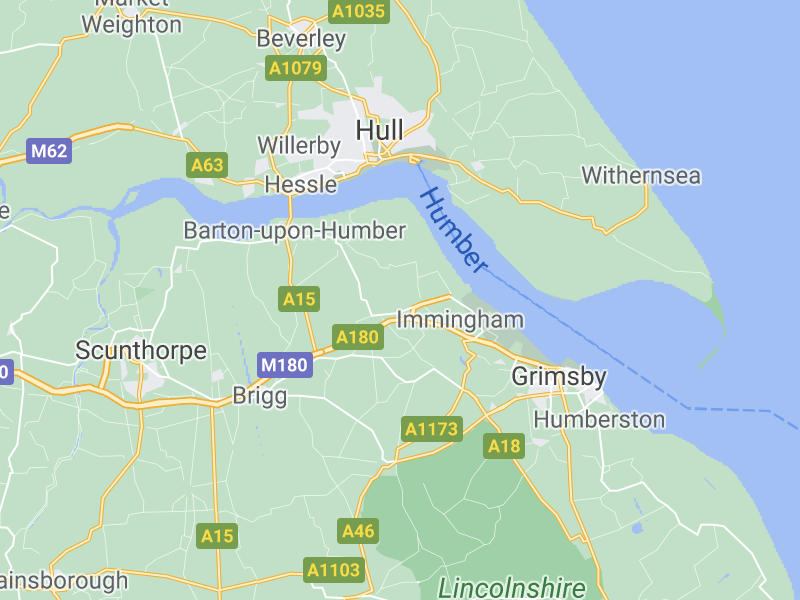
Humber Estuary

Humber Estuary

Humber Estuary

Case Study A

Bird species included in model

Bar-tailed godwit (Limosa lapponica), Black-tailed godwit (Limosa limosa), Common redshank (Tringa totanus), Dunlin (Calidris alpina), Eurasian curlew (Numenius arquata), Eurasian oystercatcher (Haematopus ostralegus), Grey plover (Pluvialis squatarola), Red knot (Calidris canutus), Ringed plover (Charadrius hiaticula)

Environmental issues simulated

Port development and sea-level rise changing habitat area and habitat availability time

Recommendations from modelling

Sea-level rise and port development can reduce shorebird survival if feeding conditions poor.

More information

Stillman, R. A., West, A. D., Goss-Custard, J. D., McGrorty, S., Frost, N. J., Morrisey, D. J., Kenny, A. J. & Drewitt, A. L. (2005) Predicting site quality for shorebird communities: a case study on the Humber estuary, UK. Marine Ecology Progress Series, 305, 203-217.

Funding

ABP Marine Environmental Research and English Nature

Case Study B

Bird species included in model

Bar-tailed godwit (Limosa lapponica), Black-tailed godwit (Limosa limosa), Common redshank (Tringa totanus), Dunlin (Calidris alpina), Eurasian curlew (Numenius arquata), Eurasian oystercatcher (Haematopus ostralegus), Grey plover (Pluvialis squatarola), Red knot (Calidris canutus), Sanderling (Calidris alba), Turnstone (Arenaria interpres)

Environmental issues simulated

Unspecified driver and sea-level rise changing habitat area and habitat availability time

Recommendations from modelling

Habitat loss and sea-level rise can reduce shorebird survival, but effects vary between species.

More information

Bowgen, K.M., 2016. Predicting the effect of environmental change on wading birds: insights from individual-based models. PhD thesis, Bournemouth University in collaboration with HR Wallingford.

Funding

Bournemouth University and HR Wallingford

Case Study C

Bird species included in model

Bar-tailed godwit (Limosa lapponica), Black-tailed godwit (Limosa limosa), Common redshank (Tringa totanus), Dunlin (Calidris alpina), Eurasian curlew (Numenius arquata), Eurasian oystercatcher (Haematopus ostralegus), Grey plover (Pluvialis squatarola), Red knot (Calidris canutus), Ringed plover (Charadrius hiaticula), Turnstone (Arenaria interpres), Sanderling (Calidris alba)

Environmental issues simulated

Intertidal habitat creation

Recommendations from modelling

Increasing the area of intertidal habitat by the creation of a coastline managed realignment site can increase the number of birds supported.

More information

Mander, L. (2023) Understanding space and habitat use of the near threatened Eurasian curlew to inform the value of habitat restoration schemes for the species’ conservation. PhD Thesis, University of Hull.

Funding

University of Hull